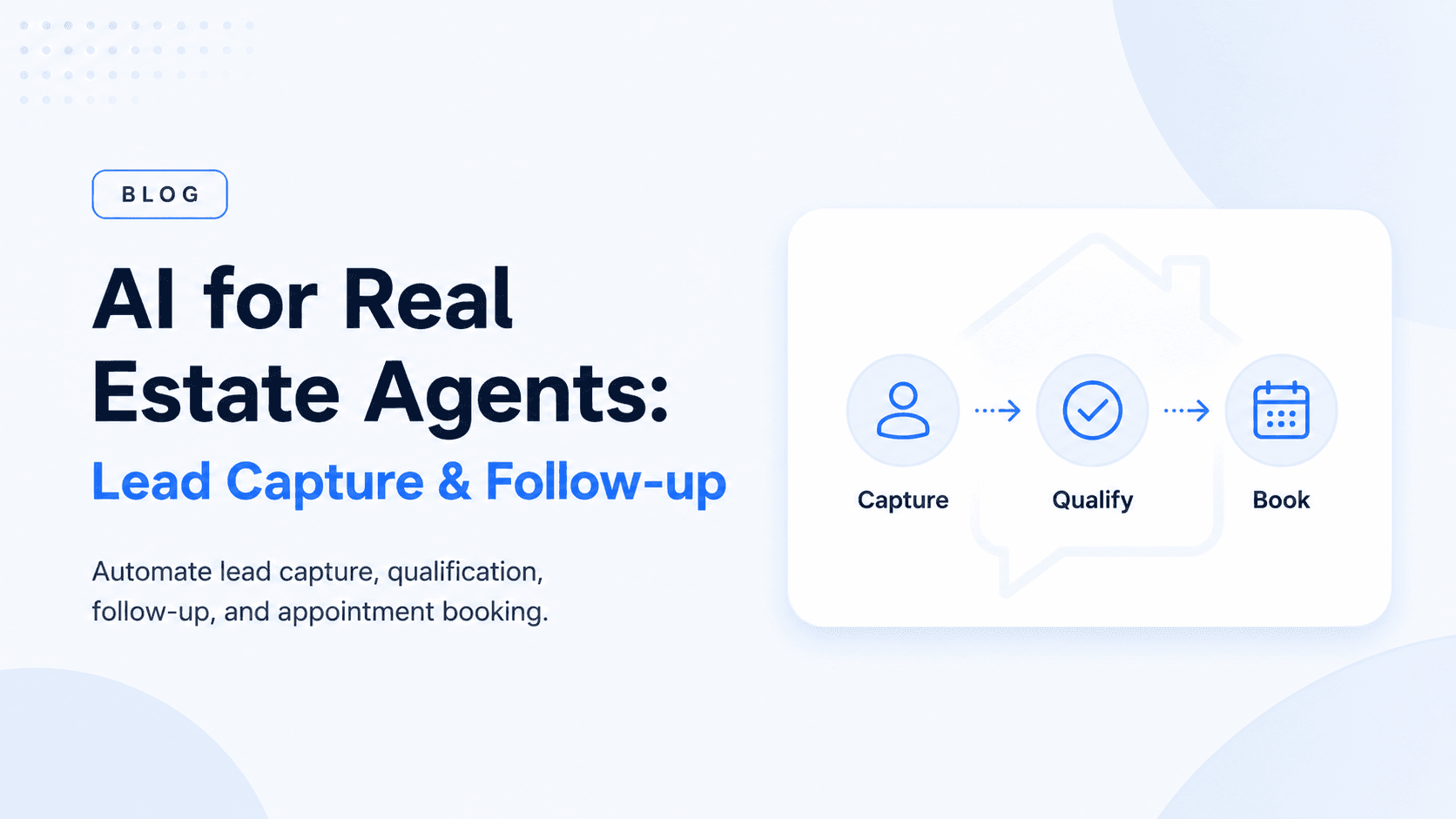
Real estate is a speed-to-lead business. Buyers and sellers often talk to whoever responds first with useful information.
That is why AI for real estate agents works best around lead capture, qualification, follow-up, and booking.
The goal is not to replace agents. The goal is to make sure good leads do not get lost between portals, WhatsApp, website forms, missed calls, and CRM notes.
Capture leads from every channel
Agents often receive leads from websites, portals, WhatsApp, Facebook, Instagram, referrals, and calls.
AI can centralize intake and collect:
- Buyer or seller intent
- Budget
- Preferred location
- Property type
- Timeline
- Financing status
- Contact preference
Structured lead data makes follow-up much easier.
Build one intake flow across channels
Most real estate teams have the same problem: every channel has a different format. A portal lead may include one listing ID. A WhatsApp message may say "Is this still available?" A website form may include only name, phone, and budget.
AI can normalize these into one lead profile:
- Source channel
- Listing or campaign source
- Buyer, seller, tenant, or landlord intent
- Budget or expected sale price
- Preferred neighborhoods
- Property type and size
- Urgency and timeline
- Contact details and best time to respond
- Conversation summary
This gives the agent context before the first call and helps managers understand where high-quality leads are coming from.
Qualify buyers automatically
An AI assistant can ask the same questions a good agent would ask before recommending properties.
For buyers, it can collect budget, area, bedrooms, must-have features, mortgage status, and viewing availability.
For sellers, it can collect property type, location, expected price, timeline, and reason for selling.
Buyer qualification questions
A strong buyer flow should avoid feeling like a long form. Ask a few questions conversationally, then route the lead when there is enough context.
Useful buyer questions:
- Are you looking to buy or rent?
- Which area or neighborhood do you prefer?
- What is your budget range?
- How many bedrooms or bathrooms do you need?
- Are you pre-approved or still exploring financing?
- When do you want to move?
- Do you want to schedule a viewing?
The AI assistant can then summarize the lead for the agent: "Buyer wants a 2-bedroom apartment in DHA, budget up to 45M PKR, prefers ready-to-move, available for viewing this weekend."
Seller lead qualification
Seller leads need a different flow. The assistant should collect enough information for an agent to prioritize the opportunity.
Useful seller questions:
- What type of property are you selling?
- Where is it located?
- What size and condition is it?
- Do you have an expected price?
- How soon do you want to sell?
- Is the property occupied, vacant, or rented?
- Would you like a valuation call?
Seller automation is especially useful because these leads can be high value but often arrive with very little detail.
Recommend listings
When connected to your inventory or MLS-style data source, AI can suggest properties based on user preferences.
The important part is accuracy. The assistant should only recommend available listings from trusted data and clearly explain why each option matches.
Good listing recommendations should consider:
- Budget fit
- Location match
- Property type
- Bedrooms and size
- Availability
- Viewing schedule
- Buyer intent
- Similar listings if the original property is unavailable
Keep listing data clean
Real estate AI depends heavily on listing quality. If inventory is outdated, the assistant will disappoint users no matter how good the model is.
Clean listing data should include:
- Current availability
- Accurate price
- Location and map area
- Property type
- Bedrooms, bathrooms, and size
- Photos or media links
- Amenities
- Viewing availability
- Agent or team owner
AI can also flag stale listings, missing fields, duplicate entries, or descriptions that do not match the structured data.
Follow up without sounding robotic
AI can draft personalized follow-ups after a buyer views a listing, misses a call, submits a form, or asks about a property.
Examples:
- "I found two similar apartments in your budget"
- "Would you like to view this property on Friday?"
- "This listing is no longer available, but here are alternatives"
WhatsApp and appointment booking
In many real estate markets, WhatsApp is where the real conversation happens. AI can help agents respond faster while keeping the tone natural.
Useful WhatsApp workflows:
- Reply instantly to listing availability questions
- Ask qualification questions
- Share matching listings
- Send location pins or viewing details
- Remind buyers before viewings
- Follow up after a missed call
- Notify the agent when a lead is ready for human attention
For viewings, the assistant should check availability, suggest time windows, confirm the appointment, and send the agent a short lead summary.
CRM handoff
The assistant should sync qualified leads into the CRM or pipeline tool with enough context to act.
A good handoff includes:
- Contact details
- Source channel
- Interested listing
- Budget and preferred area
- Buying or selling timeline
- Financing status, if known
- Conversation transcript
- Suggested next step
This prevents the common problem where agents receive a lead but have no idea what the buyer already asked.
What not to automate first
Some real estate workflows need human judgment from day one.
Be careful with:
- Final price negotiation
- Legal advice
- Contract terms
- Financing promises
- Property condition claims
- Sensitive seller motivations
- Anything that could be interpreted as a binding commitment
The assistant can gather information and prepare the conversation, but the agent should handle negotiation, legal details, and high-trust relationship moments.
Metrics to track
Measure the workflow by business outcomes:
- Speed to first response
- Lead qualification rate
- Viewing bookings
- Show-up rate
- Portal lead conversion
- WhatsApp response time
- CRM completeness
- Follow-up consistency
- Revenue influenced by AI-assisted leads
These numbers help you decide whether to improve capture, recommendations, follow-up, or agent handoff.
A practical rollout plan
Phase 1: Website or WhatsApp intake
Start by capturing and qualifying buyer leads from one main channel.
Phase 2: CRM sync and agent alerts
Send structured lead summaries to the CRM and notify the right agent when a lead is high intent.
Phase 3: Listing recommendations
Connect trusted listing data and recommend available properties based on buyer preferences.
Phase 4: Follow-up sequences
Add automated reminders, viewing confirmations, unavailable-listing alternatives, and post-viewing check-ins.
Start with a small workflow
The best first project is usually a website or WhatsApp assistant that captures leads, qualifies them, and books appointments.
Once that works, add listing recommendations, CRM sync, and follow-up sequences.
Build your real estate AI workflow
Ownex Labs can build AI lead capture and follow-up systems for real estate teams. Contact us to map your current lead flow and identify the fastest automation win.